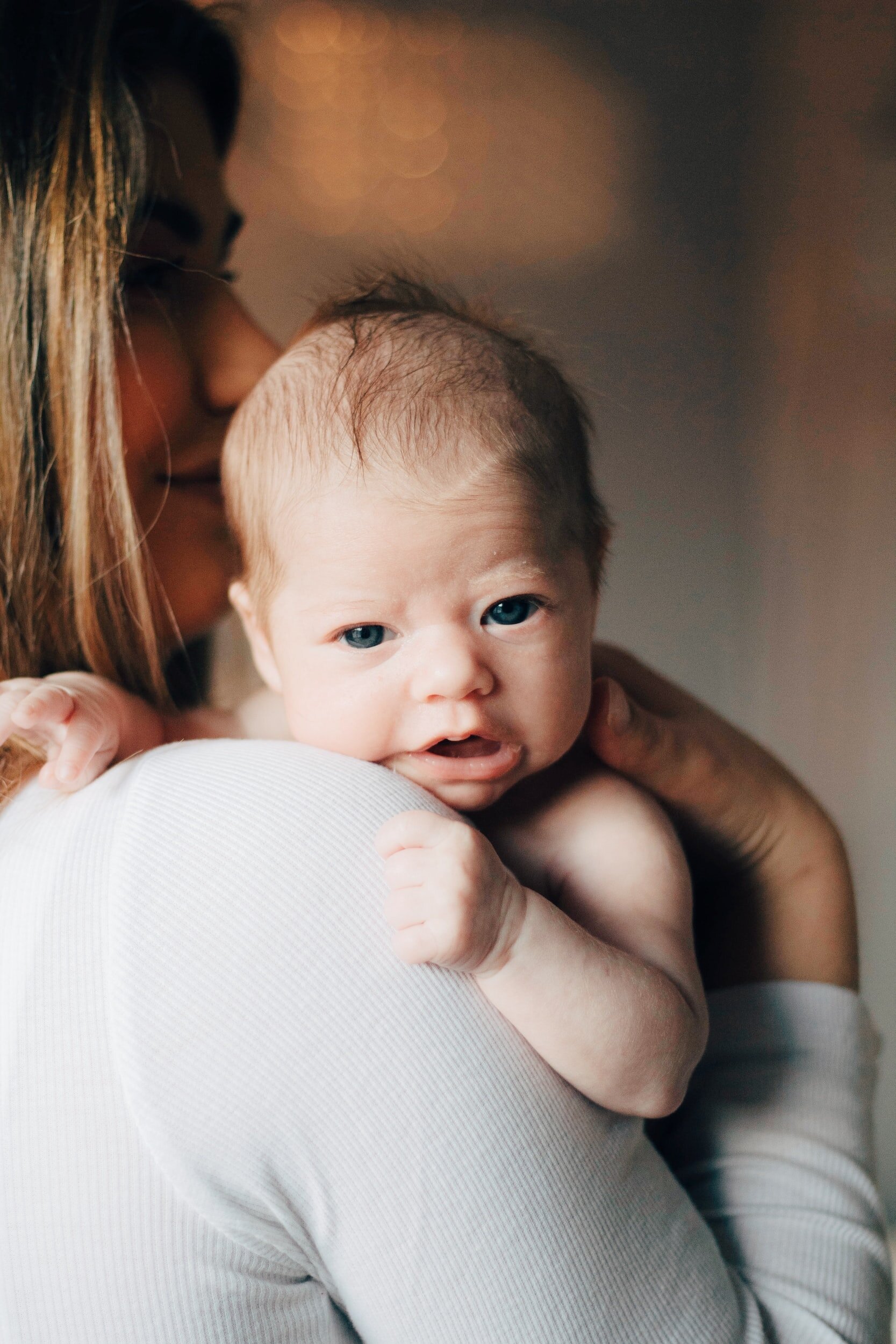
Why South Asian mothers stay silent after a difficult birth and what helps them come forward
It’s important to make a space where South Asian women can feel heard, writes Dr Rati Khurana
“Jachcha-bachcha dono theek hain.”
(Mother and baby are both fine.)
In many South Asian families, this is the first thing the family hears from the doctor after a birth. It is kindly meant, and most of the time it is true. But it only describes the outcome. It says nothing about what the mother may have gone through to get there.
There is a famous saying, “All’s well that ends well.” Does it fit a difficult birth? Honestly, I don’t think it does. A healthy baby cannot always shield a mother from the memory of how that baby arrived. She can be deeply grateful and love her child completely, but does that make her immune to a long labour, an emergency, pain nobody explained, or the fear she felt in that room? Probably not.
Why she says nothing
A big part of the answer lies in what she hears around her. She is expected to look at the bright side because her baby is healthy and she is finally a mother, and that alone is a blessing. Of course, it is. What goes missing is any acknowledgement of what she went through. Instead, it gets normalised. “Every woman goes through it.” “You must bear it.” “Move on and focus on the baby.” After hearing this a few times, many mothers decide that silence is easier. Some begin to doubt their own experience and ask themselves, “Was it really that bad, or am I just weaker than everyone else?”
For South Asian women, and especially for those raising a baby far from where they grew up, a few more things add to the silence. Motherhood is treated as something sacred, so struggling with it can feel like failing at the one thing she was meant to do naturally. Emotional pain is rarely talked about at home, and families tend to notice the body before the mind. In a busy multigenerational home there may be no private corner for a phone call or a visit from the health visitor. And in UK interviews with South Asian and Black mothers, one fear came up again and again: that if she admits she is not coping, her baby might be taken away. NICE guidance names this very fear as a reason women do not speak up.
The numbers reflect it. In England in 2017, Indian, Pakistani and Bangladeshi women had about half the White British rate of first contact with NHS community mental health services around the time of birth, or less. Yet once they were in contact, they kept their appointments. That does not sound like women who don’t want help. It sounds like women who cannot find the door, or are not sure what is behind it.
So, what could help?
At home, a mother usually opens up in a space that feels safe and understanding without advising. Listening to someone doesn’t have to come with your version of their problem, or with advice. That is what an adviser does, and what she needs is a confidante. The first change happens when a family member or friend makes a space safe enough for her to just be whatever she is feeling. Angry, upset, irritated, grateful, grieving, while still knowing she is a good mother.
Being heard should not feel like a privilege to her. It is where healing often begins.
The person who can make that space may be someone she already trusts: her own mother, a sister, a friend, sometimes her mother-in-law. Let her choose who that is, without anyone ridiculing her choice.
In maternity care, there needs to be room for these conversations at every postnatal check, about baby blues, postnatal depression and simply how the birth was for her. Not every experience has to be labelled as an illness. Midwives, health visitors and nurses can be trained to notice distress and respond kindly without rushing to a diagnosis. Without that sensitivity, a mother’s feelings are easily misread or brushed aside as normal. NICE is clear that a birth can be traumatic even when it was straightforward on paper, so the question is how she experienced it, not how it looks in her notes.
In the words we use, sensitivity matters too. “Trauma” is a very personal word, and there is no single tick box for it. What is traumatic for one person may not be for another, and that can depend on perspective, resilience and many other things. It also means that my understanding of someone’s experience is not enough to call it “not traumatic” or “normal”. The least we can do is offer empathy, even when it doesn’t seem like a big deal to us. We didn’t live it, so our opinion should not cancel her pain. We are always told to step into somebody’s shoes to understand them. Maybe we should first try to step out of our own. A simple question like “How was the birth for you?” can go a long way.
What services can do
If South Asian mothers are not coming forward, perhaps the door needs to move closer to them. Talk about difficult births in the words families actually use, and in their own languages, not only through the phrase “birth trauma”. Go where mothers already are: baby clinics, GP surgeries, community centres, temples, gurdwaras and mosques. Speak to husbands and grandmothers as well, because they often decide whether she gets help at all. Explain plainly what happens when a mother asks for support, since the fear of losing her baby keeps so many women quiet. Offer an interpreter from outside her community if she would prefer one. And share the stories of South Asian mothers who have been through it, so the next woman knows she is not the only one.
She deserves to be seen and held too, because she was also born that day.
Dr Rati Khurana holds a PhD in clinical psychology and works as a mental health practitioner in New Delhi. She is an associate professor and an RCI-registered rehabilitation counsellor. Her book for new mothers, She Was Also Born That Day, is an Amazon bestseller, and its proceeds and royalties go to charity, including the Smile Foundation. helpdocrati.com



Adult hand touching baby’s hand